No re-keying, ever
Detail is entered once, when the job is booked, and flows straight to the note. A description typed once from saved records is far harder to get wrong than the same thing written out at every stop.
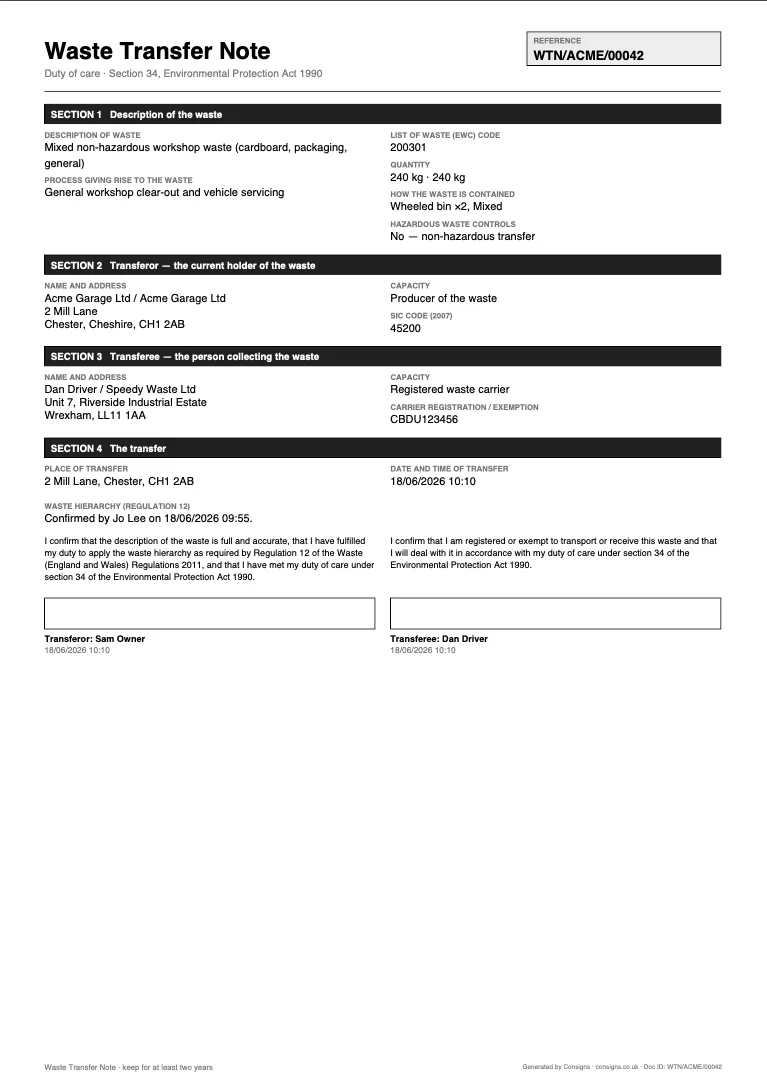
A waste transfer note travels with every load of regular, non-hazardous waste. Consigns makes it digital. Raise it on a phone, sign it on site, and it stores itself. No carbon copies, no re-typing back at base.
This page is about the software. The blog covers how a transfer note differs from a consignment note and what the duty of care means.
The job is the same. The paperwork does not have to be.
Three steps. Three chances to lose it or get it wrong.
One pass. Nothing re-typed, nothing to file.
Detail is entered once, when the job is booked, and flows straight to the note. A description typed once from saved records is far harder to get wrong than the same thing written out at every stop.
Regular waste needs a transfer note. Hazardous waste needs a consignment note. Consigns does both off the same job and picks the right document for the waste type, so your team is not juggling two tools.
Every note is saved in your account the moment a collection is confirmed. Pull one up by customer, date or waste type in seconds. No boxes of paper, no hunting through a filing cabinet.
A waste transfer note records the duty of care when non-hazardous waste changes hands, under section 34 of the Environmental Protection Act 1990. It must be kept for at least two years. Consigns holds every note for the full period, ready to show in seconds.
A hazardous load uses the HWCN01 consignment note instead. There the producer keeps their copy for at least three years, and the receiving site keeps it for five.
Consigns is waste-note software for UK carriers, covering transfer notes and consignment notes, with on-site signatures, automatic PDFs and safe storage. It also files to DEFRA digital waste tracking for the loads that need it.
Free for 14 days. Cancel any time before it renews.